eSource:AMoreConnectedApproachtoClinicalResearchDocumentation
Bring clinical research documentation into a structured digital environment. Connect subject information, study visits and source records to help research teams manage essential documentation with greater visibility and organization.
TransformtheWayYourResearchTeamManagesSourceDocumentation
Source documentation is fundamental to clinical research. From subject visits and clinical assessments to supporting records, research teams need reliable ways to create, organize, review and retrieve study-related information.
Traditional documentation workflows can involve paper records, spreadsheets, shared folders and disconnected applications. These approaches can make it difficult to locate information, coordinate activities and maintain a consistent view of study documentation.
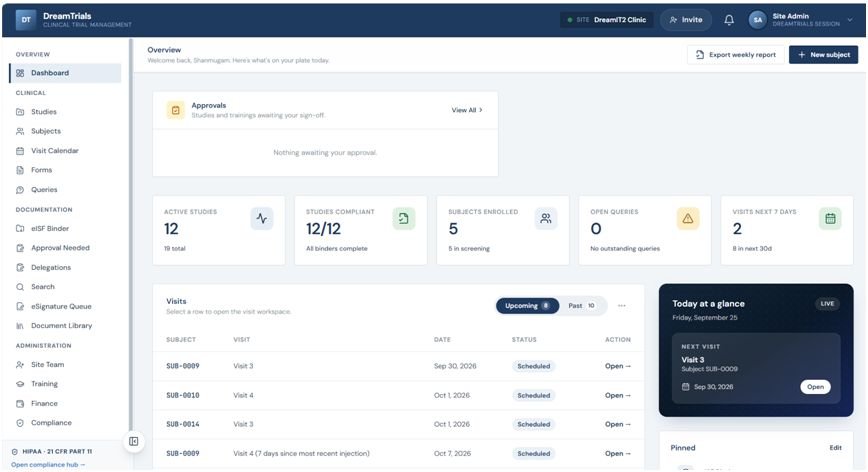
Dream IT² eSource is designed to support a more connected approach to electronic source documentation. By bringing source-related information into an organized digital environment, it aims to help research teams manage documentation alongside their broader clinical research activities.
Whether a site is managing a single study or coordinating several active trials, a structured approach to source documentation can help teams improve visibility and reduce unnecessary administrative work.
Thechallengesoftraditionalsourcedocumentation
Fragmented documentation
Source records may be spread across paper files, spreadsheets, folders and different software applications. Finding the relevant information can take time, particularly when several studies are active.
Repetitive administrative work
Research coordinators often spend considerable time organizing records, locating supporting information and updating documentation across different workflows.
Complex visit documentation
Clinical studies involve scheduled visits, assessments and follow-up activities. Managing the related source information can become challenging as the number of subjects and visits increases.
Limited operational visibility
Without a consistent view of documentation activities, it can be difficult for teams to identify outstanding work and understand the status of records.
KeycapabilitiesofDreamITeSource
1. Structured electronic source records
2. Subject-centric documentation
3. Visit-related documentation
4. Centralized access to study information
5. Connected clinical workflows
HoweSourcesupportstheclinicalresearchworkflow
01
Study and subject organization
Begin with the relevant study and subject context so that source documentation is organized around the research being conducted.
02
Visit-related activities
Associate relevant documentation with the corresponding study visits and their operational context.
03
Documentation management
Use an organized digital environment to manage and retrieve source-related information.
04
Review and follow-up
Support the team’s review of documentation and identify items that may require further attention, subject to the product’s available workflow functions.
Designedaroundtheneedsofresearchteams
For clinical research coordinators
Spend less time navigating disconnected documentation locations and keep study-related information more organized.
For principal investigators
Support access to relevant study documentation and provide a more structured environment for research-related information.
For site managers
Gain a clearer operational view of documentation workflows across studies and subjects.
For growing research organizations
Establish a more consistent approach to managing documentation as the number of studies, subjects and team members increases.
Partofaconnectedclinicalresearchecosystem
eSource is one component of a broader clinical research environment. When used alongside other relevant solutions, it can form part of workflows involving electronic consent, regulatory documentation, study management, training and financial operations.
The goal is to reduce fragmentation between essential activities and give research teams a more connected way to manage their work.