eRegulatory/eISF:AStructuredHomeforClinicalTrialDocumentation
Organize essential regulatory documents, manage document statuses and maintain a more consistent view of clinical research site files.
BringYourEssentialRegulatoryDocumentsTogether
Regulatory documentation is an essential part of clinical trial site operations. Investigator site files contain important records associated with the conduct and oversight of clinical research, including approvals, study documents, investigator information and training records.
As studies progress, the volume of documentation can grow considerably. Managing files through paper binders, shared folders and separate applications can make it difficult to maintain consistent organization and locate the correct documents
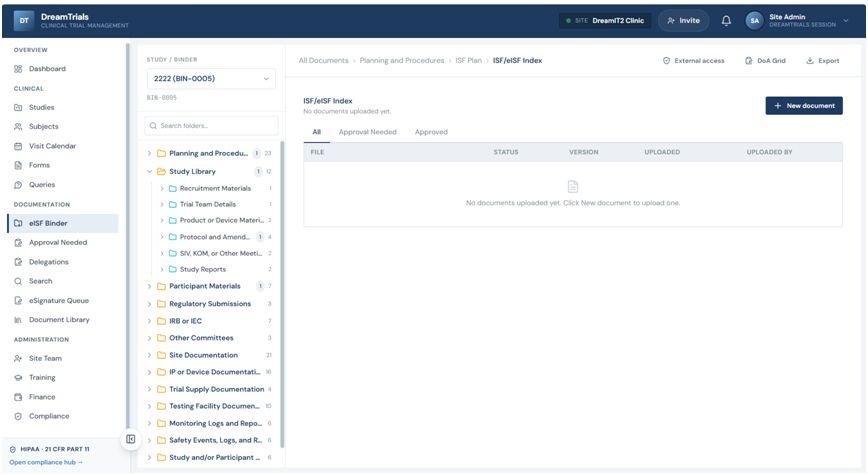
Dream IT² eRegulatory/eISF is designed to provide an organized electronic environment for clinical research site documentation. It supports a structured approach to document organization and status visibility, helping teams manage regulatory records as part of their wider study operations.
Thechallengesofregulatorydocumentmanagement
Complex document organization
Regulatory files can include numerous document types, versions and study-specific records. Without a consistent filing structure, locating the right information may require considerable effort..
Document status management
Research teams need to understand which documents are pending review, approved or require additional attention. Tracking these activities manually can make oversight more difficult.
Version complexity
Updated protocols, forms and other study documents can result in multiple versions. Maintaining clarity about which version is relevant is an important part of document management..
Coordination across site personnel
Investigators, coordinators and other authorized personnel may all have responsibilities related to regulatory documentation. They need an organized way to work with relevant records.
KeycapabilitiesofDreamITeRegulatory/eISF
1. Structured electronic site files
2. Document classification and organization
3. Document status tracking
4. Document version visibility
5. Upload and document management
6. Study-level document visibility
HoweRegulatory/eISFsupportsthedocumentlifecycle
01
Create a structured document library
Organize the site’s electronic files using relevant study and document categories
02
Upload and classify documents
Add relevant records and associate them with the appropriate document types and study context.
03
Review document information
Use document status and available version details to understand the current state of records.
04
Manage follow-up activities
Identify documents requiring attention and coordinate the next steps according to the site’s established procedures.
05
Maintain an organized site file
Keep relevant documentation within a consistent electronic filing structure as the study progresses.
Supportingthepeopleresponsibleforsitedocumentation
For clinical research coordinators
Organize study files, locate relevant documents and manage routine document-related activities.
For investigators
Maintain a more structured view of essential study documentation and associated records.
For regulatory coordinators
Work with a centralized electronic filing structure and review the status of relevant documents.
For site managers
Improve visibility into the organization and status of site documentation across studies.
Aconnectedapproachtoresearchdocumentation
Regulatory documentation is closely associated with training, consent, source documentation and study management. A connected clinical research environment can help teams manage these related activities without treating every document workflow as a separate process.